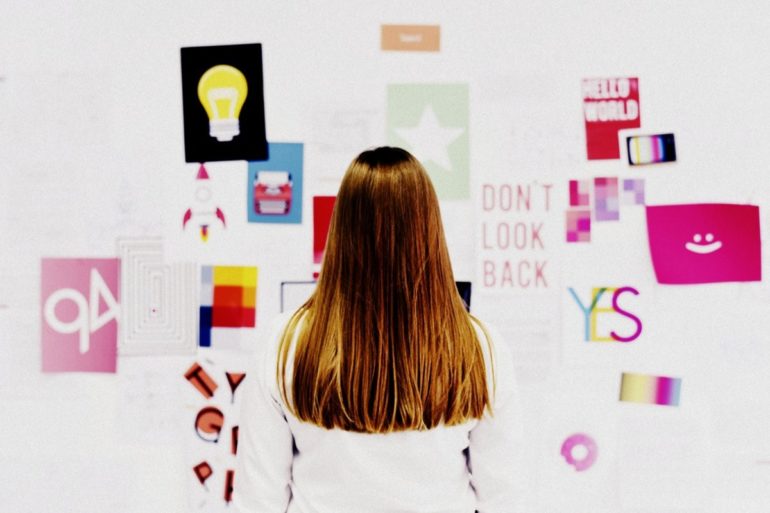
What an extremely tough thing for teens to figure out: What should you do with your future?
A report revealed that telecommuting can boost employee job satisfaction and productivity, but only when it's carefully implemented.
A study finds that men are more likely to share their creative work online than women, despite the fact that women and men engage in creative activities at essentially equal rates.
The urgent desire for a successful business -- and the fear of losing business -- drives many a good person to do sleazy things.
Looking for a good book? Stay away from the award-winning section of the bookstore or library.
This advice is geared towards small business owners, particularly people who are just starting (or about to start) their own business.
Procrastination, the habit of putting tasks off to the last possible minute, can be a major problem in both your career and your personal life. Side effects include missed opportunities, frenzied work hours, stress, feeling overwhelmed, resentment and guilt.
Backpackers scored 50 percent better on a creativity test after spending four days in nature disconnected from electronic devices, according to a study by psychologists from the University of Utah and University of Kansas.
Pride in success can prevent us from taking further action toward our goals. We should not allow our brains to convince us that a failure is a success just so that we can stop trying.
When there are conflicting demands from work, home and the classroom, any hectic time can be filled with stress.
The authors of this study looked closely at the ways beginners versus experts respond to negative or positive feedback.
But when a task is presented as fun, researchers report in a new study, the same individuals often do worse than those who are less motivated to achieve.
What makes someone a great leader? Here are 11 important factors of leadership that stay the same from decade to decade, century to century.
Procrastination is a curse, and a costly one. Putting things off leads not only to lost productivity but also to all sorts of hand wringing and regrets and damaged self-esteem. Are we programmed for postponement and delay?
How does someone else’s success mean anything bad for you?
There are a number of factors that influence how well we do in school, including the amount of time we study and our interest in a subject.
Life's greatest tragedy consists of men and women who earnestly try, and fail! The tragedy lies in the overwhelmingly large majority of people who fail, as compared to the few who succeed.
Organizing can be broken down into a step-by-step process that anyone can follow.
Do you have difficulty saying “no”? Are you always trying to be nice to others at the expense of yourself?
As an increasing number of freelancers depend on the virtual workplace, how can they make themselves more attractive to potential employers?
Writers who use long words needlessly and choose complicated font styles are seen as less intelligent than those who stick with basic vocabulary and plain text, according to research from Princeton University in New Jersey.
Little research exists in the area of self-talk, although internal dialogue often influences the way people motivate and shape their own behavior.
Can money make us happy if we spend it on the right purchases?
Gretchen Rubin is a published author who wrote 'The Happiness Project' -- a memoir about how test-driving every principle, tip, theory, and scientific study she could find -- whether from Aristotle or St Therese or Martin Seligman or Oprah.
Extraversion does not just explain differences between how people act at social events. How extraverted you are may influence how the brain makes choices -- specifically whether you choose an immediate or delayed reward, according to a study.
If you choose to file your own trademark without the assistance of an attorney, you don't necessarily need to hire someone else to do it for you. Skip the fees and go right to the source.
When faced with a difficult decision, we try to come up with the best choice by carefully considering all of the options, maybe even resorting to lists and lots of sleepless nights.
A study has found that you are more likely to perform well if you do not think too hard, and instead trust your instincts.
“From now on, I’ll connect the dots my own way.” – Bill Watterson Goodness knows I’ve put in my share of...
It's hard to keep yourself going when you don’t feel the same excitement as you did in the beginning.